Choosing a Xylitol Natural Sweetener supplier involves more than comparing prices. Buyers need to understand the product’s origin, specifications, and intended use. Xylitol is a sugar alcohol that may be produced from plant-derived materials, but sourcing methods differ. Ask suppliers for clear documentation rather than relying on broad marketing language.
Details matter. Review the product specification for purity, moisture, particle size, and packaging format. Request current quality documents, such as a certificate of analysis, and check whether the supplier can provide traceability information. These records help buyers assess consistency between shipments. They do not replace independent verification when a project requires it.
This guide introduces notable suppliers serving markets around the world and outlines practical points for comparing them. A strong supplier should explain its capabilities, lead times, quality controls, and shipping options in specific terms. Buyers should also confirm that product grades suit their food, oral-care, or other permitted applications. Availability and standards can vary by region, so verify current details directly with each company.
There is no perfect shortlist. Company names alone cannot guarantee a good fit. A supplier with broad distribution may not offer the right specification, while a smaller producer may have limited delivery coverage. Treat rankings as a starting point, then compare evidence, responsiveness, and sample results before making a sourcing decision.
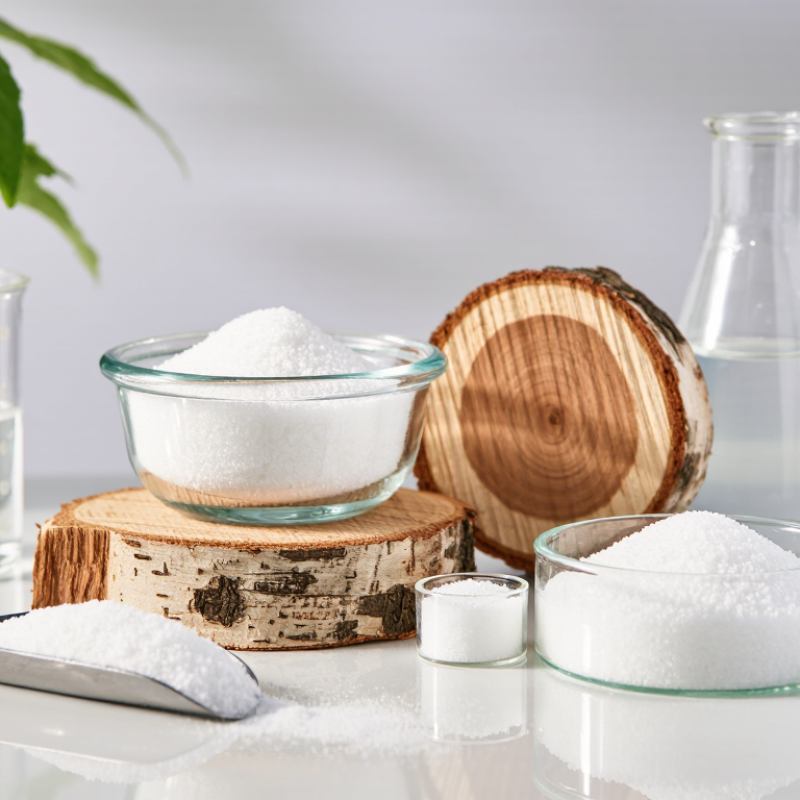
Xylitol is a sugar alcohol found in small amounts in berries, vegetables, oats, and other plants. Commercial production commonly uses birch wood or corn cobs as raw materials. Manufacturers extract xylose, then convert it into crystalline xylitol through controlled processing. The origin matters, but purification matters more. A natural source does not automatically guarantee a superior ingredient.
Xylitol looks like ordinary sugar and provides a similar level of sweetness. It has fewer calories and usually causes a smaller blood glucose response than sucrose. Its cooling sensation is noticeable in chewing gum, mints, toothpaste, and selected baked foods. Dental researchers also study it because oral bacteria use xylitol poorly. This may reduce acid production and support better tooth care, although it cannot replace brushing or professional treatment.
Reliable worldwide suppliers should document raw material sources, purity, moisture, particle size, and microbiological results. Clear batch testing builds confidence for food manufacturers and consumers. Buyers should also examine storage conditions because humidity can cause clumping. It is not perfect. Large amounts may cause bloating or diarrhea, especially for people with sensitive digestion. Xylitol is highly toxic to dogs, so products containing it require careful household storage. The word natural can sound reassuring, but practical safety depends on dosage, processing, labeling, and responsible use.
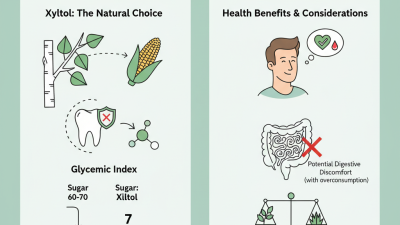
Xylitol is a five-carbon sugar alcohol found naturally in small quantities in fruits, vegetables, and plant fibers. Commercial xylitol is commonly produced from hemicellulose-rich agricultural materials such as birch wood and corn cobs. It provides sweetness close to sucrose with fewer calories per gram and a much lower glycemic index.
The chart compares representative reference values for xylitol and sucrose. Relative sweetness is indexed to sucrose = 100; calorie and glycemic-index values can vary slightly by source and testing method. Xylitol is widely used in sugar-free chewing gum, mints, toothpaste, oral-care products, and reduced-sugar foods.
Supplier evaluation should begin with evidence, not a glossy product sheet. Grand View Research estimated the global xylitol market at about USD 1.1 billion in 2023, with continued growth through 2030. This expansion increases sourcing options, but it also raises quality risks. Ask for the production site, country of origin, batch number, and current certificate of analysis. A dependable supplier should disclose xylitol purity, moisture, residual sugars, heavy metals, and microbiological limits.
Traceability matters.
Food safety certification is another practical filter. ISO 22000 or FSSC 22000 certification can indicate a controlled food-safety system, but certificates require verification. Check the certification body, scope, expiry date, and covered facility. Suppliers should also provide allergen statements, non-GMO documentation where relevant, and transport conditions. The Codex General Standard for Food Additives remains a useful reference when reviewing specifications and permitted uses. Local requirements still differ, so technical teams should confirm them before import or labeling.
Consistency separates a trading contact from a manufacturing partner. Request three recent batches and compare test results, particle size, color, sweetness profile, and packaging performance. A stable supplier should explain deviations rather than hide them. Yet even strong documentation has limits. Audits may miss seasonal variation or subcontracted processing. Consider a small pilot order, independent laboratory testing, and a written complaint procedure. Price deserves attention, but an unusually low quotation may reflect weaker controls, not better efficiency.
Global xylitol supply is shaped by producers in Asia, Europe, and North America. Leading suppliers typically serve confectionery, oral-care, nutraceutical, and reduced-sugar food manufacturers. Their strength depends on more than volume. Stable crystal size, low moisture, consistent sweetness, and reliable delivery are essential for commercial production.
Grand View Research estimates the global xylitol market will expand at roughly 6% annually through 2030. However, market estimates differ because analysts use different product and regional definitions. That gap deserves attention. Buyers should compare certificates, not marketing claims. ISO 22000 or FSSC 22000 systems, HACCP controls, allergen statements, and batch-level traceability provide stronger evidence of supplier reliability. A practical audit should review the production site, laboratory records, packaging room, and storage conditions. Small details matter, including sealed bags, pallet protection, and clear lot codes.
Leading suppliers also need technical support. Xylitol can affect texture, cooling sensation, crystallization, and moisture balance in finished products. Experienced suppliers provide specifications, samples, formulation guidance, and verified certificates of analysis. Shipment performance should be measured across several orders, not one successful delivery. Cost remains important, but the cheapest quotation may create higher reformulation or quality risks. Supplier evaluation is not perfect, especially when regional data is limited. A careful buyer should keep testing assumptions.
Xylitol supply begins with biomass, processing expertise, and dependable transport. Major production clusters are concentrated in China, where corn cobs provide a widely available feedstock. Some facilities also use hardwood residues, depending on local forestry practices and processing economics. Finland and other Northern European markets have relevant technical experience, especially in wood-based xylitol production. However, regional output can change with feedstock prices, energy costs, and plant maintenance. That variability matters. A low quoted price may not guarantee steady deliveries.
China’s network often connects agricultural collection points with purification plants, ports, and overseas distributors. Corn cobs must be dried, stored, and moved carefully to limit moisture-related losses. In Europe, suppliers may operate closer to customers, reducing some transit time but facing higher operating costs. North American buyers commonly assess Asian and European sources together, rather than relying on one region. This approach improves resilience when shipping schedules change. Not always smoothly.
Professional sourcing requires more than comparing product prices. Buyers should review food-grade documentation, assay results, allergen controls, and batch traceability. A capable supplier can explain raw-material origin, crystallization methods, packaging conditions, and shipment lead times. Independent testing is still valuable, particularly when specifications differ between regions. Supply networks can look efficient on paper, yet port congestion or weak inventory planning may create delays. That risk deserves attention. Long-term contracts can help, but flexible secondary sources may be wiser for seasonal demand.
Xylitol suppliers worldwide serve food, pharmaceutical, and oral-care manufacturers. Grand View Research valued the global xylitol market at about USD 1.07 billion in 2023. The same report projects strong growth through 2030, driven by sugar reduction and dental-care demand. However, market size estimates vary between research firms. Buyers should treat forecasts as directional, not guaranteed.
Product grade matters more than price alone. Food-grade xylitol commonly follows FCC specifications and may be listed as E967 in the European Union. Pharmaceutical-grade material may require USP/NF compliance, tighter impurity controls, and documented GMP systems. Suppliers should provide current certificates of analysis, microbiological results, heavy-metal limits, batch traceability, and manufacturing-origin records. Certifications such as FSSC 22000, ISO 22000, HACCP, Halal, and Kosher can strengthen verification, but a certificate alone is not proof. Independent audits still matter.
Typical applications include chewing gum, sugar-free confectionery, toothpaste, mouthwash, tablets, and powdered formulations. In oral care, xylitol supports low-sugar product positioning, although evidence should not be overstated. A Cochrane review reported limited certainty regarding its caries-prevention benefits. Formulators must also consider digestive tolerance. Large amounts may produce a laxative effect, and European rules require a related warning when foods contain more than 10% added polyols. Supplier selection is therefore not only a sourcing decision. It is a quality, labeling, and formulation decision. The difficult part is often overlooked: consistent particle size can affect blending, compression, and mouthfeel.
This table describes common supplier categories and market offerings, not a ranked list of named companies. Certifications and product specifications are supplier- and facility-specific; verify current documents and compliance for each purchase.
| Supplier Category | Typical Product Grades | Quality Documents and Certifications to Check | Common Industry Applications | Procurement Considerations |
|---|---|---|---|---|
| Large-volume manufacturers | Food-grade crystalline xylitol, commonly supplied as granules or powder; bulk formats may be available. | Food-safety system certificate (such as FSSC 22000, BRCGS, or ISO 22000, where applicable); specification, certificate of analysis (CoA), allergen statement, and traceability documents. | Sugar-free confectionery, chewing gum, tabletop sweeteners, and selected baked or processed foods. | Confirm assay, moisture, particle-size range, packaging, origin, lead time, and lot-to-lot controls. |
| Specialty ingredient distributors | Food-grade powder and crystals in multiple pack sizes; some distributors can source fine, standard, or coarse particle sizes. | Current CoA and product specification; food-safety and identity documentation for the actual manufacturing site; Halal or Kosher certificates if required and available. | Product development, pilot production, regional food manufacturing, and formulation trials. | Check whether the distributor is the manufacturer or reseller, and request manufacturer and country-of-origin details. |
| Pharmaceutical and excipient suppliers | Controlled-specification crystalline grades intended for use as an excipient, subject to applicable regional requirements. | Compendial or customer-specific specification, validated analytical methods where applicable, CoA, change-control information, and excipient quality-system documentation. | Oral-care products, lozenges, chewable dosage forms, and other pharmaceutical or healthcare formulations where permitted. | Confirm intended-use suitability, pharmacopoeial status in the target market, impurity limits, and supplier change-notification procedures. |
| Regional importers and logistics suppliers | Imported food-grade xylitol in locally stocked or made-to-order packaging; grade and particle size depend on the upstream producer. | Import and food-handling documentation, traceability records, CoA linked to the supplied lot, and applicable local regulatory documents. | Small and medium-sized food manufacturers, distributors, and buyers requiring local inventory. | Verify storage conditions, repacking controls, shelf life, lot traceability, and responsibility for product complaints. |
| Custom-formulation and blending suppliers | Xylitol supplied alone or blended with other permitted ingredients for specific sweetness, texture, or handling requirements. | Full ingredient declaration, blend specification, batch CoA, food-safety documentation, and applicable allergen and cross-contact statements. | Custom tabletop sweeteners, dry mixes, confectionery systems, and tailored food formulations. | Review the complete formulation: a blended product is not equivalent to pure xylitol and may have different labeling requirements. |
Regulatory and technical note: Xylitol is a sugar alcohol (polyol), identified as INS 967 in the Codex International Numbering System and as E 967 in the European Union. Applicable food uses, labeling, and specifications depend on the destination market. Xylitol is commercially produced from xylose, commonly through hydrogenation; “natural” claims should be checked against local labeling rules and the specific product’s manufacturing process. Excessive consumption of polyols may cause laxative effects.