China Best Xylitol for Dental Health Manufacturers? This question deserves more than a price comparison. The World Health Organization’s Global Oral Health Status Report 2022 estimates that nearly 3.5 billion people live with oral diseases worldwide. That scale creates strong demand for credible, science-led ingredients. Xylitol is a sugar alcohol used in chewing gum, lozenges, toothpaste, and oral-care formulations. Yet product quality can vary sharply between suppliers.
For buyers, “best” should mean verified performance, not attractive packaging or a low quotation. Reliable Chinese manufacturers should provide batch-specific certificates of analysis, production traceability, heavy-metal testing, microbiological results, and clear manufacturing standards. ISO 9001, HACCP, GMP, and relevant food-grade documentation can support supplier evaluation. The EFSA Journal’s 2011 scientific opinion recognized specific dental benefits for sugar-free chewing gum, including plaque-acid reduction and support for tooth mineral maintenance. These findings apply to defined product conditions. They do not prove that every xylitol powder prevents cavities.
Evidence remains imperfect. A Cochrane review on xylitol-containing products reported limitations in study quality and consistency. That matters. Marketing can outrun evidence. Grand View Research’s xylitol market analysis identifies food, pharmaceutical, and oral-care applications as major demand areas, but market growth does not equal clinical effectiveness. This guide examines China-based manufacturers through documentation, purity, application expertise, customization, export experience, and quality control. It also considers whether suppliers can explain dosage, particle size, packaging protection, and stability without making unsupported health claims. That distinction matters. Reliable sourcing begins with careful questions.

Xylitol is a naturally occurring five-carbon sugar alcohol. It tastes sweet but behaves differently from ordinary sugar. Oral bacteria, especially Streptococcus mutans, cannot readily ferment it into cavity-forming acids. This may reduce acid attacks on tooth enamel. Xylitol also encourages saliva flow, which helps wash away food particles and restore minerals after eating. It is supportive, not magical.
A practical option is sugar-free gum containing xylitol after meals. Chew it for about 10 to 20 minutes, especially when brushing is not possible. Saliva may feel noticeably increased. Still, gum cannot replace brushing twice daily with fluoride toothpaste or cleaning between teeth. Excessive xylitol may cause bloating or loose stools, so tolerance matters. People with digestive sensitivity should start carefully.
The dental evidence is promising but not perfectly consistent. Xylitol does not repair an existing cavity, and product formulas vary. Some “sugar-free” products contain other sweeteners that oral bacteria can still use. Checking the ingredient list is worthwhile. A dental professional can also recommend suitable amounts for children, older adults, or people with frequent decay. Real routines are imperfect. Missing one serving is less important than relying on xylitol while neglecting regular dental care.
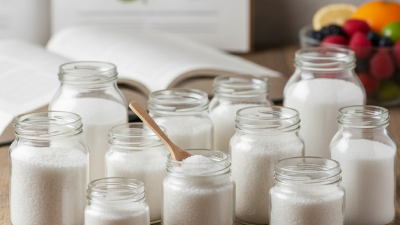
Dental-grade xylitol should begin with a specification, not a marketing claim. The Food Chemicals Codex monograph commonly expects xylitol assay at not less than 98.5% on a dry basis. Buyers should also request identity, moisture, ash, reducing sugars, and impurity results. These tests matter when powder is used in tablets, lozenges, or chewing gum. A clean white powder is not proof of purity.
Manufacturers should follow documented GMP procedures and maintain batch-level certificates of analysis. Testing should use validated methods, with traceable laboratories and retained samples. Packaging also deserves attention. Moisture barriers help prevent clumping during warehouse storage. Small details can affect mouthfeel and tablet stability. Dental grade is not always a universally regulated term, which creates room for confusion.
The WHO Global Oral Health Status Report 2022 estimates that oral diseases affect nearly 3.5 billion people worldwide. This raises demand for lower-cariogenic sweetening options, but xylitol should not be presented as a cure. A Cochrane review reported limited and low-certainty evidence for xylitol’s caries-prevention benefits. That finding deserves honesty. Responsible suppliers should disclose particle size, origin, test dates, allergen controls, and microbiological limits. Sensory performance also matters: excessive cooling can make a product unpleasant, even when laboratory results look excellent.
| Quality Dimension | Recommended Dental-Grade Requirement | Why It Matters for Oral-Care Applications | Typical Verification Method | Reference or Compliance Basis |
|---|---|---|---|---|
| Identity | Xylitol; CAS No. 87-99-0; molecular formula C5H12O5; relative molecular mass approximately 152.15 | Confirms that the supplied ingredient is xylitol rather than another polyol or a blended sweetener. | Infrared spectroscopy, chromatographic identity testing, and supplier documentation | Recognized chemical identity information for xylitol |
| Assay / Purity | Target purchasing specification: not less than 99.0% xylitol on a dry basis; the applicable pharmacopoeial or food-grade monograph should govern the final limit. | High purity provides consistent sweetness, cooling effect, formulation performance, and predictable polyol content. | High-performance liquid chromatography or validated equivalent method | Applicable FCC, pharmacopoeial, or national food-additive specification |
| Moisture / Loss on Drying | Common procurement target: not more than 0.5% by mass, unless the approved product specification states otherwise. | Controls caking, storage stability, powder flow, and consistency in tablets, powders, lozenges, and chewing-gum applications. | Karl Fischer titration or validated loss-on-drying procedure | Approved internal specification aligned with the applicable monograph |
| Appearance and Color | White crystalline powder or granules, free from visible foreign matter, unusual odor, and abnormal discoloration. | Supports consumer acceptance and helps identify contamination, degradation, or processing abnormalities. | Visual inspection under defined lighting; color comparison against an approved reference | Finished-product specification and good manufacturing practice |
| Particle Size | Must be defined according to the application, such as powder, fine granule, or compressed-tablet grade; the supplier should provide a sieve or particle-size distribution profile. | Affects dissolution rate, mouthfeel, compressibility, dust generation, and blending uniformity. | Sieve analysis or laser diffraction particle-size analysis | Application-specific technical specification |
| Microbiological Quality | A commonly used purchasing benchmark is total aerobic microbial count ≤1,000 CFU/g, yeast and mold ≤100 CFU/g, and absence of Salmonella in 25 g. Limits must be confirmed against the destination-market regulation. | Reduces microbiological risk in oral products that remain in contact with the mouth or are ingested. | Validated total-count, yeast-and-mold, and pathogen methods | Destination-country food or pharmaceutical microbiological requirements; internal acceptance criteria |
| Heavy Metals and Elemental Contaminants | Comply with the legally applicable limits for lead, arsenic, cadmium, mercury, and other relevant elements in the destination market. | Limits exposure to contaminants that may enter through raw materials, water, processing equipment, or packaging. | ICP-MS or ICP-OES after validated sample preparation | Applicable food, pharmaceutical, or contaminant-control legislation |
| Residual Solvents and Process Chemicals | Residual solvents, if used during production, must comply with the applicable regulatory limits; the process and solvent status should be disclosed. | Supports product safety and helps assess the suitability of the material for direct-consumption oral-care products. | Headspace gas chromatography or other validated residual-solvent method | Applicable ICH, pharmacopoeial, or national requirements |
| Dental Suitability | Use as a sugar-free sweetening ingredient; avoid claims that the raw material alone prevents or treats dental disease. | Xylitol is a polyol that is not readily fermented by common oral bacteria in the same way as fermentable sugars; finished-product benefits depend on formulation and use pattern. | Finished-product formulation review, sugar-free verification, and regulatory claim review | Applicable food-claim rules and evidence-based oral-health guidance |
| pH and Aqueous Solution Behavior | Define the test concentration and acceptance range in the product specification; results should be consistent between batches. | Helps identify contamination or abnormal impurities and supports predictable performance in rinses, syrups, and dissolved formulations. | Calibrated pH measurement of a specified aqueous solution | Application-specific quality-control method |
| Manufacturing-System Controls | Documented GMP, HACCP-based food-safety controls, traceability, allergen controls, change control, and validated cleaning procedures. | Reduces the risk of mix-ups, cross-contamination, undeclared allergens, and inconsistent batch quality. | Quality-system audit, batch-record review, traceability exercise, and certificate verification | GMP, HACCP, ISO 22000, FSSC 22000, or equivalent recognized systems |
| Batch Documentation | Each batch should have a certificate of analysis covering identity, assay, moisture, microbiology, contaminants, lot number, production date, and retest or expiry information. | Enables incoming-material release, complaint investigation, recall readiness, and consistent formulation control. | Document review and, where appropriate, independent confirmatory testing | Good documentation practice and buyer quality agreement |
| Packaging and Storage | Use sealed, food-contact-compatible packaging that protects against moisture and contamination; store in a cool, dry place according to the approved shelf-life study. | Xylitol is hygroscopic enough to require moisture protection to preserve flowability and handling quality. | Packaging inspection, seal-integrity checks, and accelerated or real-time stability data | Food-contact packaging requirements and documented stability program |
Note: Numerical values identified as “common procurement benchmarks” are purchasing targets rather than universal legal limits. Final specifications should be matched to the destination market, intended oral-care product, and applicable food or pharmaceutical monograph.
Leading Chinese xylitol manufacturers combine large-scale production with tighter quality control. Many use purified plant-based raw materials, including corn cobs or hardwood sources. Their facilities commonly support food-grade xylitol, fine powders, crystals, and customized particle sizes. Some factories also provide tablets, chewing gum bases, and oral-care ingredients through contract manufacturing.
Reliable suppliers should show current certificates, batch records, and traceability documents. Look for HACCP, GMP, and ISO-based quality systems, where applicable. Independent testing can verify xylitol purity, moisture, microbiological limits, and heavy-metal levels. HPLC analysis is especially useful when buyers need consistent specifications across shipments.
Documentation matters. A polished website does not prove production quality.
Experienced manufacturers may support private-label packaging, export cartons, sample testing, and flexible order quantities. Their technical teams can recommend particle sizes for toothpaste, lozenges, or chewable products.
However, not every factory has strong dental-health expertise. Some mainly serve the food industry and may lack oral-care testing experience. Buyers should request stability data, product specifications, and evidence supporting any dental claim.
Low pricing can be attractive, but it may reflect weaker testing or inconsistent raw materials. Supplier audits and retained samples remain practical safeguards.
Even capable manufacturers can experience batch variation, so verification should continue after the first order.
Comparing China’s xylitol suppliers requires more than checking price lists. Dental applications need consistent purity, reliable particle size, and clear production records. Request a current specification sheet, certificate of analysis, and batch traceability documents. Confirm whether the material is food-grade and suitable for products such as chewing gum, lozenges, or oral-care formulations.
Evaluate the supplier’s testing process. Ask about moisture, purity, microbiological limits, heavy metals, and allergen controls. Independent laboratory reports can strengthen confidence, especially for export orders. A serious supplier should explain sampling procedures and retain reference samples. Communication also matters. Technical staff should answer formulation questions directly, not only forward a sales sheet.
Tips: Compare two or three recent batches, not one sample. Check packaging strength, storage instructions, minimum order quantity, and lead time. Ask how damaged cartons or failed test results are handled. A low quotation may appear attractive, but hidden inspection or shipping costs can change the result. One weakness in many comparisons is overvaluing certificates while ignoring batch consistency. That deserves a closer look. A small pilot order can reveal practical issues, such as dusty handling, slow documentation, or delayed responses. No supplier is perfect. The better choice is the one with transparent evidence and dependable corrective action.
Choosing the best Chinese xylitol manufacturer requires more than comparing prices. The WHO Global Oral Health Status Report estimates that 3.5 billion people live with oral diseases. This demand increases pressure on suppliers and buyers.
Xylitol may support lower caries risk when it replaces fermentable sugars. However, evidence remains mixed. A Cochrane review found insufficient high-quality evidence for strong preventive claims.
Excessive intake may also cause digestive discomfort. Ask manufacturers for clear usage guidance, not exaggerated dental promises.
Tips for buyers:
Verify ISO 22000, FSSC 22000, HACCP, or GMP certificates directly with the issuing body. Check whether each certificate covers the actual production site. Request recent batch records and a third-party certificate of analysis.
Test purity, moisture, ash, heavy metals, microbiological limits, and residual solvents. Confirm the raw-material source and traceability system. Food-grade documentation should match your target market’s requirements.
Halal or Kosher certification may also matter. A certificate alone is not proof of consistent quality.
I would still audit the facility, review complaint records, and inspect sealed packaging. This step can reveal small problems before they become expensive ones.